
Following up on the two-layer workflow post: in the last few days I added another stage to the process, and I am really happy with it. My AI dev team just grew to four: me, Claude in the chat, Claude Code, and now Codex as a dedicated code reviewer.
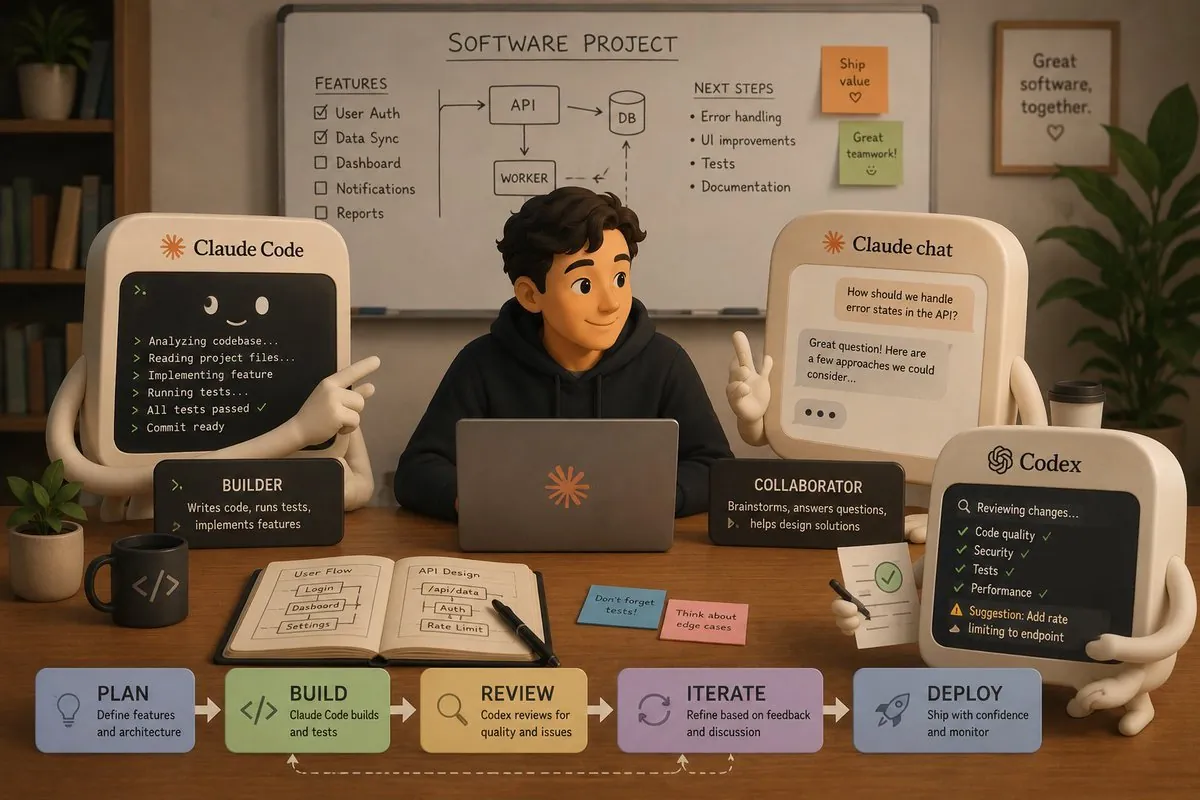
Where does the new stage fit?
In parallel to discussing the Claude Code output of each stage with Claude in the chat, I now also send Codex to do a code review on the changes. Then, when Claude and I are supposedly "satisfied", I go look at the review Codex produced.
Every point it raises goes into another discussion with Claude about what it means. Then there is another round of fixes. We repeat until Codex is satisfied and has no more comments. Right now I am running it on GPT 5.4 at medium reasoning effort.
The review is not done when we think the code is good. It is done when the reviewer runs out of notes.
Why a different model for review?
Because a fresh set of weights looking at the same diff catches things the authors accepted without noticing. Claude wrote the code and Claude reviewed the plan, so Claude shares the blind spots of the plan. Codex arrives cold, with no attachment to the decisions that produced the diff, and it regularly finds real points that survived both my read and Claude's.
The economics are simple. Moving fast is nice, but moving correctly is more important, and anything caught during development costs roughly 10 times less than the same problem caught in production. An extra control stage that reliably catches issues before merge pays for itself very quickly. This layered-review pattern is one of the first things I set up when I build agent-driven development pipelines for clients.
The part I am still debating
I am torn about whether to tell Claude that Codex is doing the review, and whether to tell Codex that the code it is checking was written by Claude. For now, neither of them knows. The reviews stay honest that way.
FAQ
Why use two different AI models for code review?
Different models miss different things. When Claude and I are satisfied with a stage, Codex reviews the same changes cold and regularly surfaces points we both accepted. Each of its comments goes back into a discussion with Claude, and we iterate until Codex has no notes left.
Is an extra AI review round a waste of time and tokens?
Moving fast is nice, but moving correctly matters more. Anything caught during development costs roughly ten times less than the same problem caught in production, so an extra review stage that reliably catches issues pays for itself quickly.